Metal roofs are not always noisy in rain; noise depends on the complete roofing system and proper installation. Modern residential roofs are quieter than exposed metal roofs on barns or garages.
Metal roofs can last 30–50 years, so homeowners should consider comfort and sound before investing. Many metal roofing myths exist, but proper installation helps ensure a quiet home.
Lightning risks depend on factors such as terrain, building height, location, and local weather, not roof noise. The main concern is the roof’s complete design and installation, not simply the use of metal.
Are Metal Roofs Make Noise in Rain – The Answer
Are Metal Roofs Noisy When it Rains or Hails?
Metal roofs are not always noisy in rain; noise depends on the complete roofing system, including insulation, decking, and proper installation. Modern residential roofs differ from exposed barn roofs, where rain and hail create louder sounds. A well-designed roof helps reduce noise and improve indoor comfort.
Barns and open garages often lack solid decking and insulation, allowing rain and hail sounds to travel inside. Properly constructed homes use multiple layers to reduce sound transmission. Metal roofs, asphalt shingles, and tile can have similar noise levels when installed over comparable roof systems.
Rain noise depends on roof decking, insulation, panel design, and installation. Hail may create sharper sounds, but panel thickness alone does not determine indoor noise. Metal roofs also do not inherently attract lightning; strike risk depends on the building’s surroundings and storm conditions.
Metal roofs can last 30–50 years, making proper installation essential for long-term comfort. Installing metal over existing shingles may help reduce noise where permitted, but the roof’s condition and local building codes must be checked. Consult a qualified roofer about insulation, decking, and installation to achieve a quieter roof.
Does Installing Metal Over Existing Shingles Reduce Rain Noise Further?
Metal recover projects offer homeowners another way to upgrade their roofs without tearing off the old roof and starting fresh. During this roof recovery process, metal panels are installed over existing shingles, allowing the existing roof layer to act as an additional insulator. This extra layer may help with sound reduction by reducing sound levels when rain hits the metal roof.
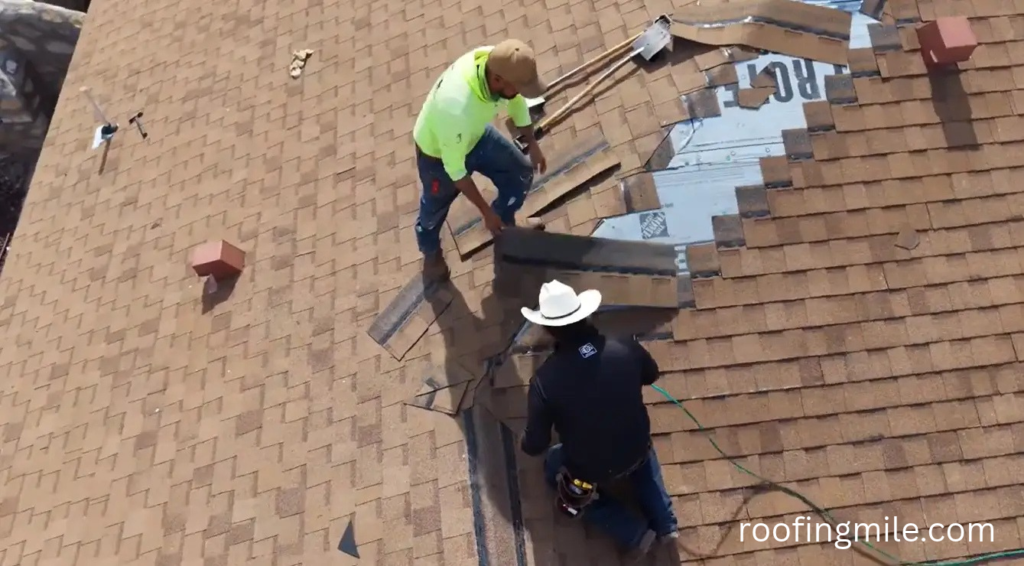
A metal recover project may reduce rain noise, but results depend on roof condition, installation, and existing insulation. An extra layer does not guarantee complete noise reduction.
Adding roof insulation can reduce indoor noise and energy costs. Proper acoustic insulation improves comfort while supporting long-term energy savings.
Roofingmile Metal’s 138T Shingle Recover system installs over existing shingles. A professional should inspect the roof and check local building requirements before installation.
Proper metal roofing can reduce rain noise and improve comfort. The best option depends on the existing roof’s condition, insulation, and installation method.
How to Add More Soundproofing to Your Home’s Upper Level?
Adding soundproofing to your home’s upper level helps reduce rain, wind, and storm noise. Proper roof construction, solid roof decking, suitable roofing materials, and insulation can improve indoor comfort and reduce sound transmission.
Inspect your roof regularly for loose roofing components, damaged flashing, and ventilation problems. Routine roof maintenance in spring and fall helps identify issues early and prevents banging noises during strong winds or storms.
A storm-resistant roof provides better weather protection, but correct installation is essential. A qualified roofing contractor can identify problems, recommend noise-control solutions, and improve roof performance without unnecessary damage.
Suitable insulation materials, such as fiberglass, wool, and closed-cell spray foam, help reduce noise entering rooms below. A dense sound barrier can further limit sound transmission when properly installed.
For better metal roof soundproofing, consider roof insulation or acoustic underlayment made from rubber or synthetic materials. These materials help absorb impact energy and reduce noise travelling through the roof structure.
During roof remodeling, ask your contractor about proper installation methods. Metal expands and contracts with temperature changes, so correct installation must allow thermal movement. Avoid overtightening roof components to reduce unnecessary noise and maintain roof performance.
Where Did the “Metal Roofs Are Loud” Myth Comes From?
The myth that metal roofs are noisy began when barns and sheds used exposed metal panels without a roof deck, underlayment, or insulation. Rain hitting these panels created loud noise, damaging metal roofing’s reputation. Today, modern metal roofs use improved roofing materials, proper installation, underlayment, and insulation to reduce sound transmission. Therefore, residential metal roofs are much quieter than traditional exposed metal roofs.
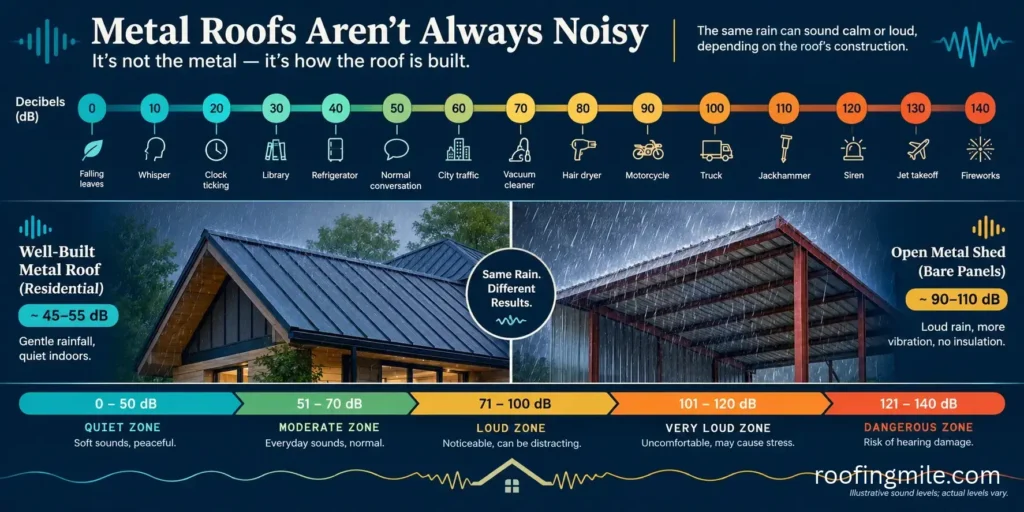
Why the Noise Myth Exists in the First Place?
The myth that metal roofs are noisy comes from barns and sheds with thin metal panels installed over open framing without a roof deck, underlayment, or insulation.
Rain makes these panels vibrate like a drum, while the open space below increases echoes and makes noise more noticeable. This noise depends mainly on roof construction, not just the roofing material.
Modern residential metal roofs use roof decking, underlayment, insulation, and finished ceilings to reduce vibrations and sound transmission. These layers help control rain noise and improve indoor comfort.
Therefore, a properly installed residential metal roof can be much quieter than the basic metal roofs used on old barns and sheds.
What Should Homeowners Do if They’re Concerned About Metal Roof Rain Noise?
Homeowners should discuss the complete roof assembly with a qualified contractor before installation. Ask about the roof deck, underlayment, insulation, and metal panels to understand how they help reduce rain noise. Proper planning improves roof performance and indoor comfort.
Noise-sensitive homeowners can consider rigid insulation boards, roof deck insulation, and suitable underlayment for better sound control. Ask the contractor which options suit your home and roof structure. Proper installation helps reduce sound transmission without losing the benefits of metal roofing.
A six-decibel difference may not always be noticeable, as sound perception depends on background noise and individual sensitivity. Therefore, evaluate actual noise levels and the performance of the complete roofing system rather than relying on numbers alone.
The first heavy rainfall can help you assess your roof’s performance. If unexpected noise occurs, ask your contractor to inspect the installation, insulation, and other possible causes. A properly constructed roof system can improve indoor comfort during storms.
How Loud is a Metal Roof Compared to Asphalt Shingles?
Research from the Acoustic Group at the University of Luleå, Sweden, found that rain measures around 46 dBA on asphalt shingles and 52 dBA on metal roofs. Although this 6 dBA difference may seem significant, it can be difficult for people to notice under certain conditions. For comparison, a whisper measures about 30 dBA, while normal conversation reaches around 60 dBA. In practice, metal roof noise depends on the roof construction, materials, and proper installation. A complete roof assembly with suitable underlayment and insulation can reduce sound transmission, making a properly installed metal roof comfortable for homeowners during rainfall.
Does Metal Roof Panel Thickness Affect Noise Levels?
Panel thickness and material affect how metal roofs respond to rain and hail, but proper roof assembly and installation are more important for controlling noise. Steel is heavier than aluminum, which can influence sound transmission and vibration. However, heavier panels alone cannot guarantee noise reduction. A well-designed roof system with suitable structural support helps control vibrations and improve acoustic performance.
Why Are Metal Roofs on Barns So Much Louder Than on Homes?
Metal roofs on barns and warehouses often sound louder during rain because they lack plywood decking and insulation to absorb vibrations. The main issue is usually the roof construction, not the metal itself.
Open framing allows sound vibrations to travel through the roof and building more easily. In contrast, a complete roof assembly with decking and insulation helps reduce sound transmission and rain noise.
Sound measurements show that metal roofs over open framing can reach around 61 dBA, compared with 52 dBA for roofs with a complete assembly. This shows how proper roof construction and installation improve noise control.
Without decking and insulation, rain and hail sounds can become louder indoors. Therefore, whether metal roofs are noisy in rain depends largely on the complete roofing system, not just the metal panels.
How Metal Roofing on a Home Differs from Other Installations
Metal roof noise depends on structure and installation.
Farm buildings often lack layers that reduce rain noise.
Residential roofs use complete systems for better sound control.
Solid decking, like plywood or OSB, reduces vibrations.
It supports metal panels and improves indoor comfort.
Underlayment protects against water and helps reduce noise.
Battens, decking, and proper installation affect sound levels.
Insulation, acoustic materials, and ceilings absorb sound.
Together, these layers create a quieter indoor environment.
Metal roofs average 52 dB of rain noise, compared with 46 dB for asphalt shingles.
Proper installation and insulation help keep metal roofs quieter.
What About Hail, Wind, and Heavy Storms?
Hail, strong winds, and heavy rain noise depend on the roof design and construction. Bare metal panels on open-frame structures produce louder sounds, while solid decking and insulation reduce impact noise. A properly built residential metal roof muffles hail and rain sounds. Noise levels depend on the complete roof assembly and weather conditions.
What’s Actually Between the Rain and Your Ears?
Rain noise passes through several roof layers before reaching the room. Rigid, interlocking metal panels reduce vibration and resonance. Their design helps control noise during rainfall.
Solid roof decking, usually 1/2-inch or thicker plywood or OSB, absorbs impact. Underlayment adds another layer of protection. Together, they reduce vibration and unwanted sound.
Attic insulation and air gaps help muffle rain noise. Batts or blown insulation improve sound absorption. These layers help keep indoor noise comfortable during rainfall.
The ceiling and drywall provide the final sound barrier. A complete roof assembly offers better noise reduction than bare metal sheets. Proper decking, insulation, and installation improve indoor comfort.
Other factors, including roof membranes, insulation thickness, and panel stiffness, also affect noise control. Choosing suitable materials and checking the complete roof structure helps reduce disruptive rain sounds.
Metal Roofing has Changed Over the Years
In the past, metal roofing on barns and warehouses often created loud rain noise because of its thin sheets and building design. Modern residential metal roofing has improved through better materials, construction, and roofing designs.
Stone-coated metal roofing uses stamped steel panels shaped like tiles, shakes, or shingles. A layer of stone granules improves appearance, texture, and sound absorption while helping reduce snow and ice buildup.
Thicker, textured metal generally performs better acoustically than thin, flat sheets. Some stone-coated panels also reduce vibrations and help maintain stable roof temperatures, lowering the risk of ice dams.
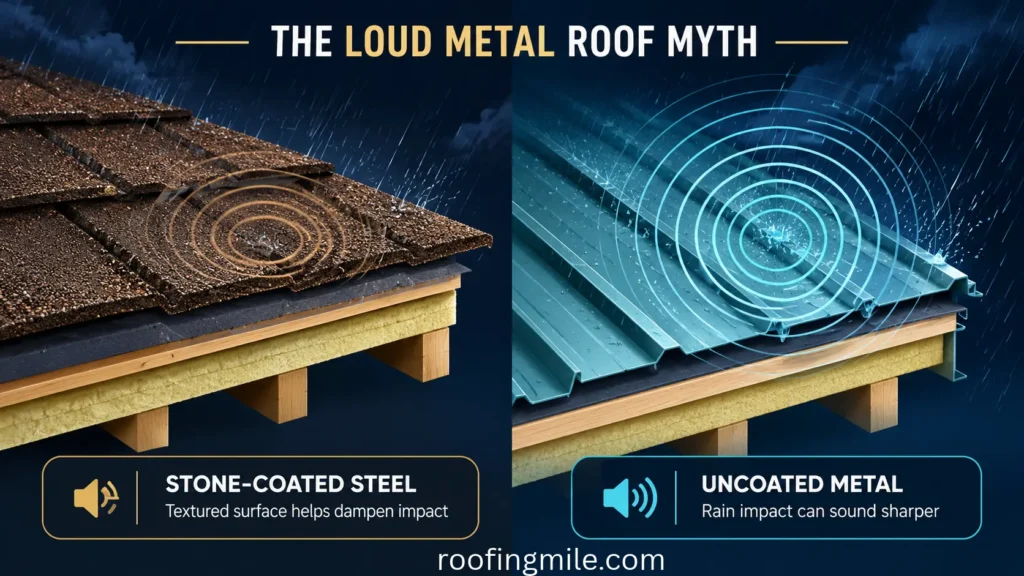
Proper insulation, suitable fasteners, and careful installation help control noise, thermal expansion, and contraction. Choosing durable materials and installing them correctly can make a metal roof quieter in the rain, although no roof is completely soundproof.
Structural Advantages of Premium Aluminum Roofing
Premium aluminum roofing provides strong storm protection, with Interlock panels rated UL 2218 Class 4 for impact resistance and winds up to 120 mph. These ratings show tested resistance to specific impacts and wind conditions.
Certified installers who follow proper specifications help ensure roof stability, durability, and reliable performance. Correct installation also reduces loose panels, rattling, and rain or hail noise.
Homeowners should check roofing certifications, impact ratings, wind ratings, and warranty terms. Proper installation and maintenance improve long-term weather protection and help prevent storm damage.
FAQ
How loud is a metal roof when it rains?
A modern residential metal roof produces about 52 decibels of rain noise, compared with 46 decibels for asphalt shingles. However, proper installation, quality roofing materials, and good insulation can reduce indoor noise, making the sound difference less noticeable depending on the roof structure and human hearing.
What is the Biggest Problem with Metal Roofs?
The biggest metal roofing disadvantages are improper installation and high initial costs. Poor installation can cause leaks, loose fasteners, and damaged seams, while metal roofs may cost 2–3 times more than asphalt shingles. Professional installation and regular maintenance improve durability and weather protection. A properly installed roof assembly can also reduce rain noise.
Why Does My Metal Roof Leak During Heavy Rain?
- Metal roof leaks during heavy rain often result from degraded rubber washers around screw fasteners, thermal expansion gaps, failing seam sealants, or overwhelmed gutters.
- Worn fastener washers, including rubber grommets and neoprene grommets beneath roof screws, can dry out, crack, and shrink due to UV rays, allowing water seepage around screw threads.
- During thermal movement, metal expands in the heat and contracts in cool night air. This constant shifting can cause screws to back out and warp panels, while damaging seam tape.
- Butyl tape or liquid sealant between overlapping metal panels may break down, allowing capillary draw to pull rainwater through joint gaps.
- Compromised flashing, including metal strips around chimneys, vents, skylights, and wall transitions, may bend or lose seal, allowing heavy runoff and wind-driven rain to slide underneath.
- Clogged gutters filled with debris prevent proper drainage, causing water pooling and water backup near the lower edge of metal panels. High water volume can force water through tiny gaps that remain dry during light storms.
- Not every drip indicates an active roof leak. Condensation, or false leaks, occurs when warm air and humid air from inside the house meet the cold underside of metal panels, forming moisture that drips down.
- Rain can also enter support channels, travel through sideways movement, and cause pooling before spilling into the interior. Identifying these issues early can help prevent damage and reduce unwanted noise caused by loose panels during storms.
What is the 25% Rule for Roofing?
The 25% rule in roofing states that if more than 25% of a roof surface area or specific roof section is repaired, replaced, or recovered within a 12-month period, current building codes may require upgrades to the affected area or entire roof. Check local roofing regulations for code compliance and requirements for roof replacement, roof recovery, and roof maintenance. Proper installation can also help reduce concerns about metal roof noise in rain.
What Maintenance Do Metal Roofs Need?
Metal roofs require little maintenance, but annual inspections help prevent damage and extra rain noise. Clear debris, clean gutters, wash with mild soap, trim nearby branches, and check for loose fasteners, scratched paint, and rust. Regular maintenance improves roof durability and keeps the roofing system in good condition.
What Are the Advantages and Disadvantages of a Metal Roof?
Pros of Metal Roofing
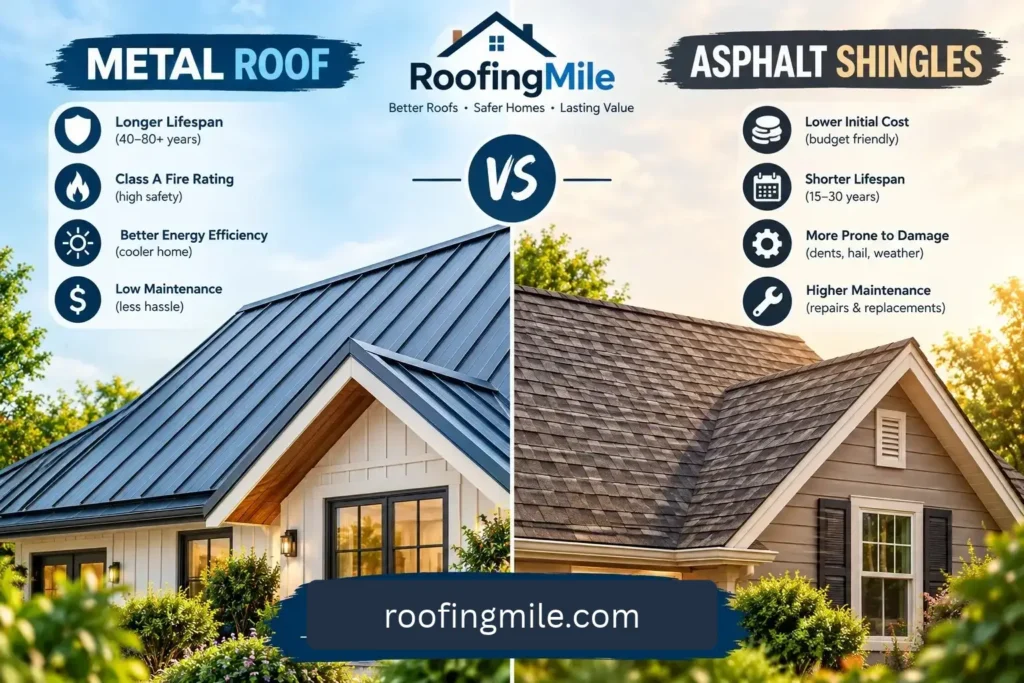
- Long Lifespan: Metal roofs offer excellent longevity, often lasting 40 to 80+ years. Their long lifespan can exceed that of standard asphalt shingles, which typically last 15 to 30 years.
- Weather and Fire Resistance: Metal roofing provides strong weather resistance and fire resistance, with a Class A rating. It can withstand high winds, heavy snow, and different weather conditions, offering good storm resistance.
- Energy Efficiency: Metal reflects solar radiant heat, improving energy efficiency and potentially reducing cooling costs and summer cooling bills by up to 25%, depending on the material and climate.
- Low Maintenance: It resists rot, mold, mildew, and insect damage, helping reduce maintenance needs.
- Eco-Friendly: Some roofing materials contain recycled content and are 100% recyclable at the end of life, supporting environmental sustainability and long-term energy savings.
Cons of Metal Roofing
- High Initial Cost: High upfront installation costs can require a larger investment. The high initial cost may range from $8 to $30 per square foot, depending on the material and installation expenses.
- Noise During Rain: Potential noise and metal roof noise may be noticeable during heavy rain, rainfall, and hail storms. However, proper insulation and effective sound insulation can reduce indoor noise.
- Risk of Denting: Softer metals, such as aluminum and copper, may suffer denting or hail damage from large hail or falling tree branches.
- Expansion and Contraction: Temperature changes can cause expansion and contraction, making metal panels expand and contract and potentially loosen fasteners, which may lead to structural movement.
- Complex Installation and Repairs: Metal roofing often requires specialized contractors because complex installation can affect durability and roofing lifespan. Future repairs, color-matching, and ongoing maintenance may also create challenges.